


A small piece of bread and a shared cup can raise big questions about faith, forgiveness, and belonging. The Lord’s Supper directs your attention to Christ’s sacrificial atonement, while calling you to consider your relationship with Him and His people.
I approach communion by beginning with Scripture, because familiar church practices can lose their meaning when their biblical foundations go unexplored. Whether you’re explaining the Lord’s Supper to your children or preparing to participate yourself, understanding the meal begins with the night Jesus shared it with His disciples.
Key Takeaways
- Jesus instituted the Lord’s Supper during a Passover meal, linking God’s deliverance with the new covenant.
- Communion includes remembrance, thanksgiving, proclamation, fellowship, self-examination, and hope in Christ’s return. Jesus said, “Do this in remembrance of me.”
- Paul’s warning about an unworthy manner calls for repentance and reverence, not sinless perfection.
- Churches differ in theology and practice, so ask your congregation about participation and preparation.
From Passover to the Last Supper
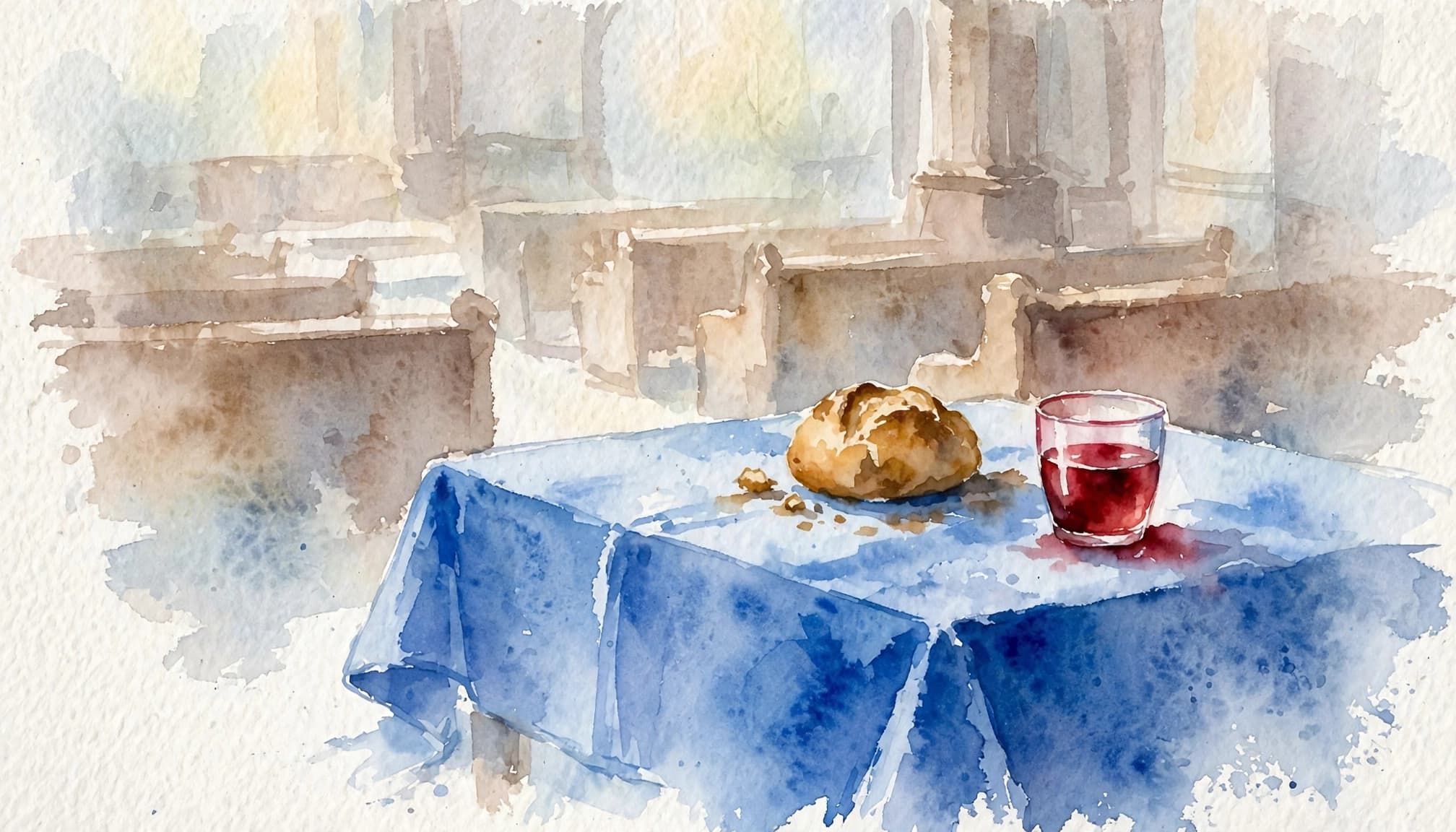
Passover remembered God’s deliverance
Exodus 12 describes the first Passover before Israel’s exodus from Egypt. Households prepared a lamb, placed its blood on their doorposts, and ate with readiness to leave. The continuing observance reminded Israel of God’s rescue.
That background matters when reading the Last Supper and understanding the Lord’s Supper. In Luke 22:15, Jesus expresses His desire to share the Passover meal with His disciples before suffering. The meal places His approaching death within the biblical story of deliverance.
I keep that connection in view without turning every detail into a hidden symbol. A commentary on Luke 22 offers further context for reading the meal alongside its Old Testament background.
Jesus identified the bread and cup with His sacrifice
Matthew 26:26-29, Mark 14:22-25, and Luke 22:19-20 record Jesus giving bread and wine to His disciples. These words of institution speak of His body and blood; Matthew 26:28 says His blood was “poured out for many.” Luke connects the cup with the new covenant, though Christian traditions interpret these words differently.
Jeremiah 31:31-34 supplies important background: God’s promised covenant includes forgiveness and His law written within His people. At the table, Jesus identifies His approaching death as the sacrificial atonement tied to that covenant promise.
For me, this keeps the Lord’s Supper centered on Jesus’ saving work. The meal calls believers to receive His grace with faith and gratitude. It never gives anyone grounds to boast about personal spiritual achievement.
What the Lord’s Supper Means
Communion holds several biblical themes together. I find it helpful to remember that the Lord’s Supper looks backward to Christ’s death, outward toward the church, and forward to His return.
Remembrance and thanksgiving
Jesus’ instruction to remember Him gives the meal its continuing place in Christian worship. Remembrance directs attention to a particular person and event: Jesus Christ giving Himself for His people.
Therefore, I don’t approach the bread and cup as a vague reminder to become a better person. They bring me back to His sacrifice and the forgiveness He provides.
Thanksgiving also belongs at the table. Jesus gave thanks before sharing the elements. The term Eucharist, used by many Christians for communion, comes from a Greek word associated with thanksgiving.
Gratitude can remain sincere during grief or hardship. You can thank Jesus for His mercy while honestly bringing Him the pain you’re carrying.
Proclamation and hope
In 1 Corinthians 11:26, Paul connects eating the bread and drinking the cup with proclaiming his death until He comes.
The congregation makes a shared confession through participation. Christ’s death remains central to its faith, even when members face different circumstances or needs.
The words “until He comes” also give communion a future direction. Jesus’ promise about drinking anew in His Father’s kingdom, recorded in Matthew 26:29, points beyond the present gathering.
Revelation 19:9 describes the marriage supper of the Lamb. I read that promised celebration alongside communion as a reason for hope. Christians remember a completed sacrifice while awaiting the fullness of life with their returning Lord.
Communion Joins Believers in One Body
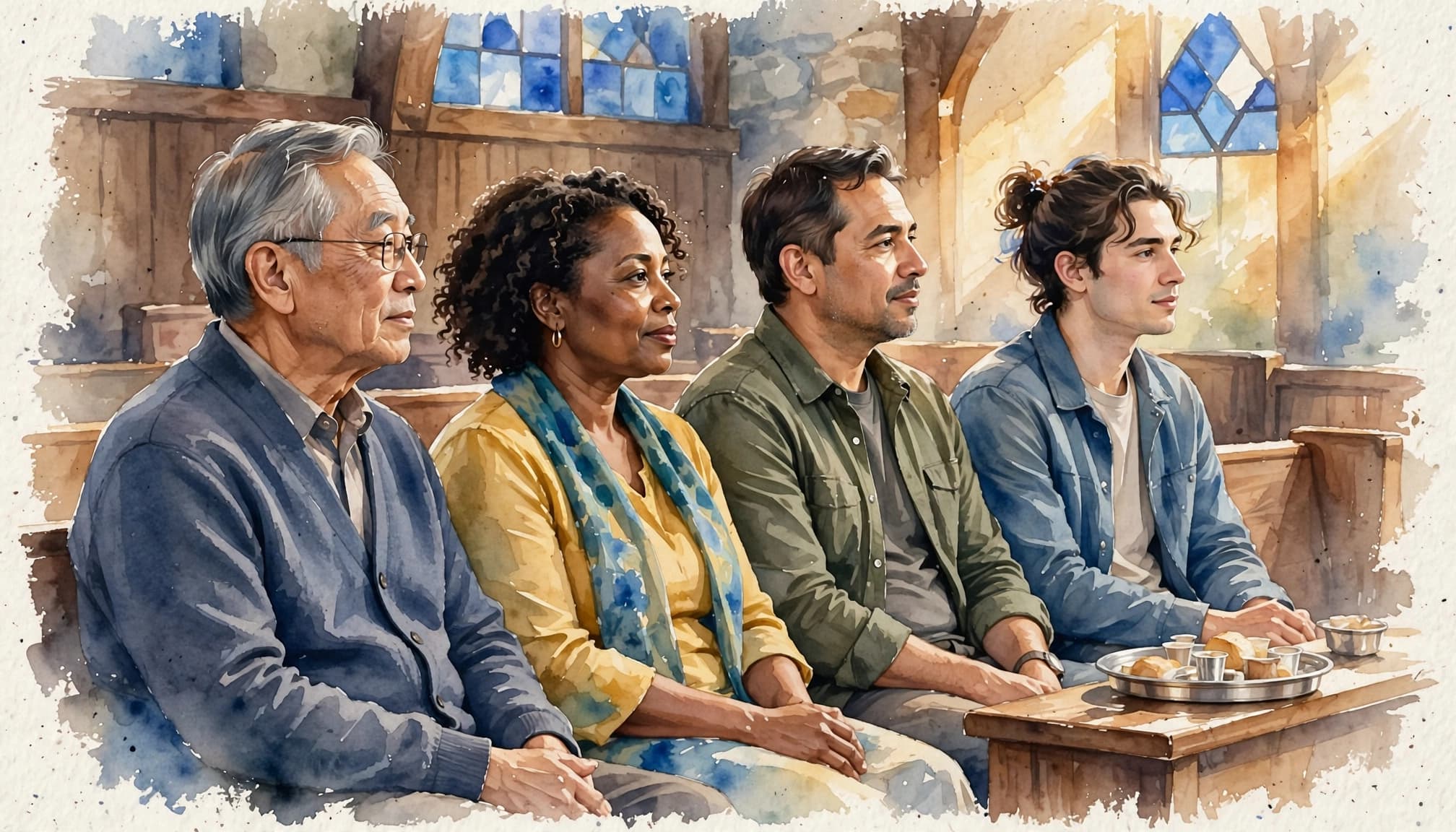
The Lord’s Supper also concerns the people beside you. In 1 Corinthians 10:16-17, Paul connects participation in the bread and cup of blessing with the church’s shared life in Christ.
This fellowship, often described with the Greek word koinonia, has a spiritual center. Believers share allegiance to Jesus and responsibility for one another through church fellowship.
Acts 2:42-47 places the breaking of bread alongside apostolic teaching, fellowship, and prayer. Read the passage in the Amplified Bible (AMP) and notice how it portrays faith through gathered life, shared meals, and generosity. References to breaking bread still need attention to context.
I find that connection important for families and singles alike. A parent carrying exhaustion and a single adult facing loneliness both need more than a friendly greeting. Church fellowship should make room for prayer, encouragement, and practical help.
The bread and wine at the table call that shared identity into focus. Differences in income, background, or visibility don’t give anyone a higher standing at Christ’s table.
Consequently, preparation should include how you treat others and whom you can support. Consider praying for unity and generosity in your congregation. Remembering Jesus while ignoring a struggling believer contradicts the love the meal celebrates. Practical care after the service belongs with the confession made during it.
Self-Examination Without Despair
Paul’s warning addresses how believers participate
In 1 Corinthians 11:17-34, Paul confronts divisions within the Corinthian gathering. Some ate ahead of others, while some went hungry. Their behavior humiliated people and damaged the congregation’s shared worship.
I read his warning alongside Paul’s account of Jesus’ meal, which begins with Christ taking bread on the night He was betrayed. The contrast makes the Corinthians’ selfishness especially serious.
The phrase “an unworthy manner” concerns the manner of participation. It doesn’t establish a requirement that believers become flawless before receiving communion.
Paul’s correction includes waiting for one another. Preparing for the Lord’s Supper therefore involves your treatment of fellow believers as well as private reflection.
Christians interpret some details of this passage differently. Still, its call to reverence, discernment, and concern for others deserves careful attention.
Confession should lead toward Christ
Self-examination gives you space to acknowledge known sin and respond honestly. I ask whether resentment, dishonesty, or disregard for someone else needs confession and a concrete change.
First John 1:9 connects confession with God’s forgiving and cleansing work, assuring believers of the forgiveness of sins. That promise directs repentance toward grace rather than self-hatred.
An apology may be necessary when your actions have harmed someone. However, reconciliation doesn’t require abandoning wise boundaries or placing yourself in danger.
Also, don’t confuse preparation with endless searching for hidden faults. If communion repeatedly triggers overwhelming fear or compulsive confession, speak with a pastor and a qualified mental health professional. Honest repentance and appropriate support can belong together.
Understanding Different Communion Traditions
Christians agree that Jesus instituted the Lord’s Supper, but they don’t explain every aspect of it alike. Terms such as real presence, spiritual presence, and the memorial view describe different understandings. Some traditions use sacramental union to describe Christ’s relation to the elements, while others explain that relation differently.
I encourage you to ask what a congregation means by those terms. Ask how it understands sacramental union between Christ and the elements, and what it teaches about spiritual nourishment.
For example, a review of Catholic Eucharistic theology focuses on transubstantiation and the real presence. In discussions of Lutheran teaching, consubstantiation is sometimes used as shorthand, though many Lutheran theologians don’t accept the label. Understanding these discussions requires attention to a tradition’s own explanations, rather than a quick summary borrowed from its critics.
When visiting a church, ask how its teaching shapes participation. Does it describe communion as an ordinance or sacrament? What preparation does it expect? Who administers the elements?
These questions help you participate with understanding. They also allow respectful conversation without pretending that genuine theological differences don’t matter. I keep returning to the biblical institution while listening carefully to how other Christians explain their convictions.
Observing Communion in the Local Church
Frequency and administration require thoughtful leadership
The New Testament commands remembrance but doesn’t prescribe a universal calendar for the Lord’s Supper. First Corinthians 11 speaks of what believers do whenever they eat the bread and drink the cup.
Acts 20:7 describes believers gathering on the first day of the week to break bread. Churches weigh that passage differently when deciding their practice.
Some congregations understand communion as a holy ordinance and observe it weekly; others do so monthly or on another regular schedule. I wouldn’t judge faithfulness by frequency alone. Teaching, reverence, and shared participation also matter.
A clear service can include reading the institution passage, explaining the bread and cup, allowing time for reflection, and offering prayer and thanksgiving. Leaders should also explain whether participants receive together or individually.
Participation guidelines should be clear and compassionate
“Fencing the table” means explaining who should participate and under what conditions. Congregations differ over baptism, membership, age, and other expectations.
I recommend asking before the service, especially when visiting or helping a child understand communion. Participation should express faith and understanding, rather than pressure to follow everyone else.
Parents can explain Jesus’ death and forgiveness in plain language. Then, discuss readiness with church leaders instead of assuming one age fits every child.
Practical access deserves care too. Ask about the communion elements if you have allergies or dietary restrictions. If you have limited mobility, request assistance before distribution begins.
A welcoming congregation can explain its convictions without embarrassing guests. Someone who isn’t ready to participate should have room to remain seated, listen, and ask questions afterward. Clear guidance protects both reverence and hospitality.
Frequently Asked Questions
What is the purpose of the Lord’s Supper?
The Lord’s Supper remembers Jesus’ sacrifice, gives thanks for His grace, and proclaims His death until He comes. It also expresses the fellowship believers share in Christ.
Do Christians agree on what happens to the bread and cup?
Christians differ in how they understand Christ’s presence and the elements. Ask a congregation how it explains communion and what its teaching means for participation.
Do I need to be sinless to receive communion?
No. Paul’s warning about participating “in an unworthy manner” calls for reverence, repentance, and concern for others, not sinless perfection. Confession should direct you toward God’s forgiveness rather than despair.
How often should a church observe the Lord’s Supper?
The New Testament commands remembrance but does not set one universal schedule. Churches observe communion at different intervals, so frequency alone does not determine faithfulness.
Returning to Christ at the Table
The Lord’s Supper brings Christ’s sacrifice into focus and calls His people to grateful, repentant fellowship. I return to its biblical foundation because understanding helps keep this familiar practice meaningful.
At the Lord’s Supper, approach the table with faith and honesty, remembering Jesus and considering the people who share the meal with you.
For questions about communion, prayer, or visiting Praise Chapel in Webster, contact Praise Chapel. Call (281) 338-6633 during normal office hours to speak with the church staff.