


You can worship beside someone every Sunday and still struggle to understand their background, language, or customs. I find that biblical unity begins with belonging to Christ through grace. It grows through the patient work of loving people whose lives differ from yours, building togetherness in community.
Scripture gives disciples a shared identity in Christ without demanding cultural sameness. This theology of unity starts with what Jesus accomplished and how the early church handled its differences.
Key Takeaways
- Jesus reconciles believers to God and joins them across cultural boundaries in the body of Christ.
- The Holy Spirit gives different gifts while making Christians members of one body.
- Christian unity takes truth, practical care, accountability when people experience harm, and a commitment to togetherness.
How Biblical Unity Preserves Cultural Differences
Christ creates a shared belonging
In Ephesians 2:14, Paul identifies Jesus as the peace between Jewish and Gentile believers. The surrounding passage describes their reconciliation through the cross and their shared access to the Father through the Spirit.
That foundation matters because cultural harmony can’t rest only on compatible personalities. Christians belong together because they belong to Jesus Christ, and grace welcomes them into one family.
I read Galatians 3:28 alongside this passage: ethnicity, social standing, and sex don’t give anyone superior standing in Christ. Your background doesn’t make you a second-class member of God’s family.
Distinct identities remain welcome
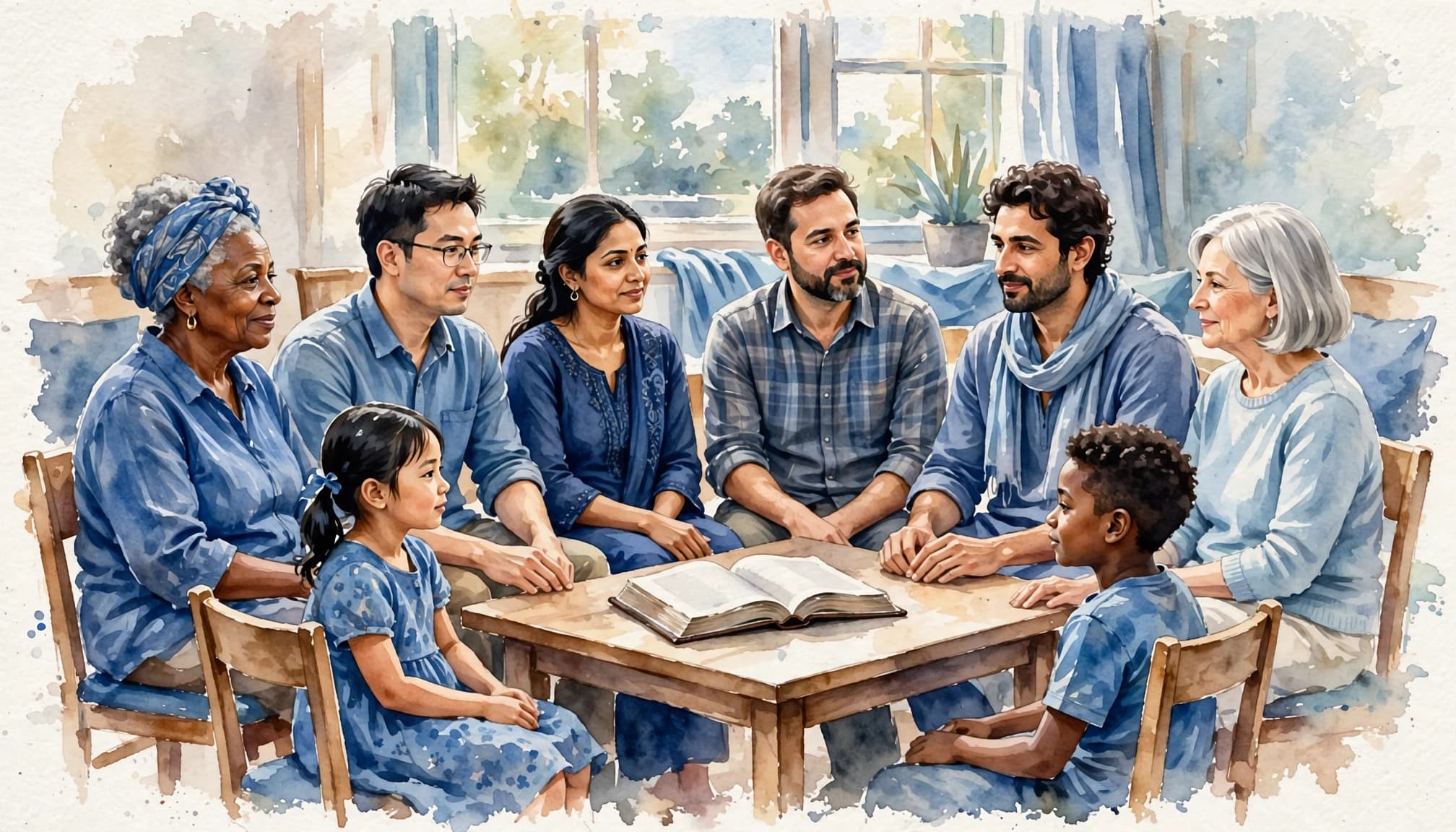
Revelation 7:9 describes people from every nation, tribe, people, and language worshiping before God’s throne. Their shared worship and togetherness include recognizable diversity.
Therefore, I don’t equate church unity with uniformity or everyone adopting the majority culture’s music, food, or communication style. Different denominations may have distinct church traditions. Every culture needs correction where it conflicts with Scripture, but unfamiliar customs aren’t automatically unbiblical.
Families can teach children to respect another language. Singles can build friendships beyond familiar circles. These ordinary choices help a local assembly welcome people without demanding assimilation.
The Holy Spirit Forms One Diverse Body
Different gifts serve the same church
First Corinthians 12:13 teaches that one Spirit brings believers into one body. Paul then compares the church to a body whose different members need one another.
The Holy Spirit distributes gifts for the common good, so differences in ability should encourage cooperation rather than competition.
I apply that principle to participation: a confident speaker shouldn’t overshadow a faithful listener. Neither cultural familiarity nor public visibility determines someone’s worth, so shared life doesn’t require uniformity. Every believer needs room to receive care and contribute.
Shared life requires spiritual maturity
Paul’s teaching in Ephesians 4 connects maintaining the unity of the Spirit with humility, gentleness, and patience. God establishes our belonging; believers practice it through sanctification, growing in patience and love.
Jesus’ prayer in John 17:20-23 also connects Christian unity with His relationship to the Father. The Trinity gives Christians a foundation for unity grounded in divine love.
I look for spiritual maturity in how people handle disagreement. Spiritual gifts should build others up, while growing patience makes room for honest conversation and togetherness in congregational life.
Truth and Justice Belong in Church Unity
The New Testament records cultural tensions in the early church. In Acts 6:1-7, Greek-speaking Jewish believers complained that their widows were being overlooked in the daily distribution. Read Acts 6:1-7 in the Amplified Bible and consider how the apostles responded to the widows’ complaint.
The apostles organized responsible leadership to address the need. They didn’t dismiss the complaint as divisive. I see a clear lesson: unity requires fair treatment, including changes when existing practices leave people behind. A pastor can help leaders listen to concerns and pursue justice when people are harmed.
Similarly, Paul confronted Peter in Galatians 2:11-14 after Peter withdrew from eating with Gentile believers. Protecting fellowship required confronting conduct that contradicted the gospel.
Cultural preferences also differ from essential doctrine. Romans 14 teaches patience over disputable matters, while shared allegiance to Jesus remains central across denominations and differing practices. I don’t use unity to excuse false teaching, prejudice, or abuse. Healthy togetherness makes room for honest concerns while holding to the gospel.
Practical Steps for Cultural Conflict in a Local Church
When relationships become strained, I recommend a process that addresses both what happened and what needs to change.
- Listen before drawing conclusions. Ask the people affected to describe the incident and its impact. James 1:19 calls believers to listen readily and speak carefully. Don’t assume one person’s experience speaks for an entire culture.
- Identify the actual disagreement. Separate biblical convictions from customs or preferences. Some disagreements involve worship preferences; racial contempt or unequal treatment is harm, not a custom. Read the relevant Scripture together before deciding which response fits.
- Address wrongdoing with accountability and justice. Matthew 18:15-17 provides a pattern for confronting sin and involving others when necessary. A trusted pastor can help guide that process. However, abuse or criminal conduct requires appropriate safeguarding and reporting. Nobody should face danger to prove a commitment to reconciliation.
- Make concrete repairs. Apologies should lead to changed conduct, not cultural uniformity. Depending on the problem, repairs could include translation support, fairer distribution of assistance, or broader participation in ministry planning. Agree on who will act and when leaders will review progress.
Forgiveness offered with grace doesn’t require immediate trust. I encourage boundaries when necessary. Consistent behavior over time makes repentance credible and allows togetherness to grow.
Frequently Asked Questions
Does unity mean agreeing on every doctrine?
Christians should hold firmly to the gospel and biblical truth. However, Christians from different denominations may differ on secondary questions, including aspects of spiritual gifts. Honest discussion can preserve togetherness without treating every disagreement as proof that someone doesn’t belong to Christ.
Why is unity across cultures difficult?
People often mistake familiar customs for biblical requirements. Language barriers, unequal influence, and unresolved hurts also strain relationships. I believe progress begins when Christians acknowledge those realities, listen carefully, and let Scripture correct their own assumptions as well as others’.
Put Unity Into Practice Together
Biblical unity grows when shared faith leads to shared responsibility and togetherness. I see it when believers listen across differences, pursue justice by correcting unfair treatment, and care for one another.
You don’t have to abandon your background to belong to the body of Christ. You can bring it into a community where Scripture shapes everyone’s life.
Ask God to show you one practical way to notice and care for someone who may be overlooked.
For prayer or support from a pastor, contact Praise Chapel or call (281) 338-6633 for help connecting with a multicultural church community.