

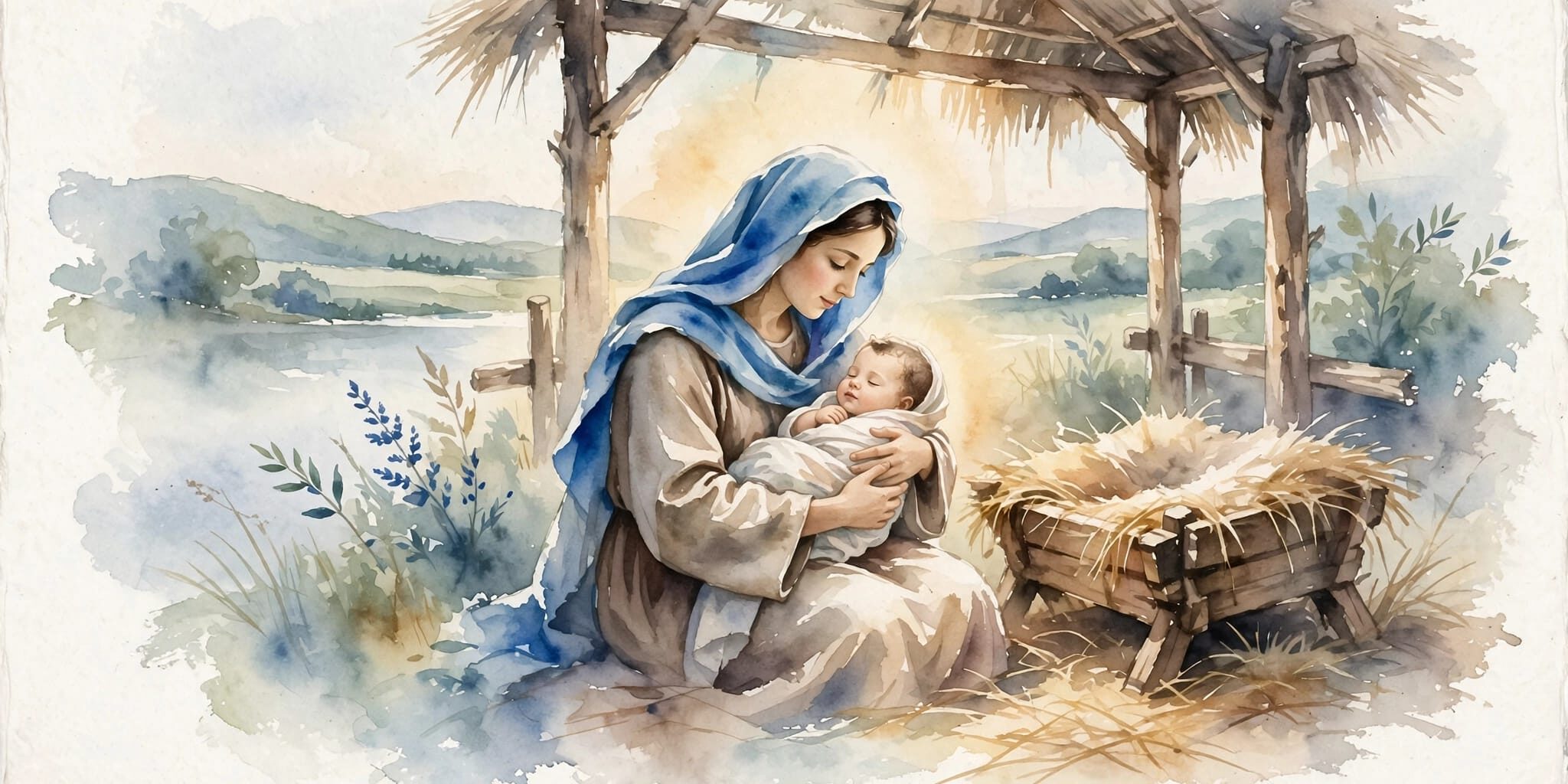
The incarnation is the Christian belief that the eternal Son of God, the second person of the Trinity, took on human flesh. Jesus Christ became truly human while remaining fully God and fully man.
I see this truth as central to understanding both Christmas and the cross. Because Jesus shares our humanity, He can represent us and meet us in suffering, restoring our relationship with God. The starting point is Scripture’s declaration that the Word became flesh.
Key Takeaways
- Jesus Christ is one person with a complete divine nature and a complete human nature.
- His incarnation made possible His saving death and bodily resurrection.
- His humanity gives you confidence to approach Him in weakness, temptation, and grief.
What does the incarnation of Jesus mean?
John 1:14 states, “And the Word was made flesh, and dwelt among us” (KJV). The incarnation is God the Son entering human life as the Word made flesh, taking on human flesh.

The eternal Son became human
Jesus’ existence didn’t begin in Bethlehem. John’s opening description of the Word identifies Him as already existing with God and as God.
Therefore, the incarnation didn’t create the Son’s relationship with God the Father within the Trinity. It revealed that eternal relationship within human history. Galatians 4:4 describes God sending His Son, born of a woman.
The word describes taking on flesh
Incarnation comes from Latin roots meaning “in the flesh” or “enfleshing.” John’s Greek terms are logos, meaning “Word,” and sarx, meaning “flesh.”
First Timothy 3:16 calls this a mystērion, or mystery, and declares, “God was manifest in the flesh” (KJV). Here, mystery describes revealed truth, not a puzzle Christians must solve before trusting Christ.
How can Jesus be fully God and fully human?
The Christian answer is the hypostatic union: two complete natures united in the single person of Jesus Christ. His humanity and divinity aren’t blended, altered, divided, or separated.
Complete humanity without lost divinity
Jesus took human form and experienced hunger, exhaustion, sorrow, and physical death. His humanity included a human body, mind, and will.
Meanwhile, Colossians 2:9 declares that in Christ dwells “all the fulness of the Godhead bodily” (KJV). Becoming human didn’t mean He stopped being God.
Philippians 2:6-8 describes Him making Himself “of no reputation,” taking a servant’s form, and showing obedience unto death on the cross. I understand this self-emptying, often called kenosis, as humble service rather than surrendering His deity.
How the church clarified this confession
Christianity’s historic councils helped clarify this belief and define Christian doctrine. The Council of Nicaea’s confession in 325 affirmed that the Son shares the Father’s divine being. Nicaea established an essential foundation, but it didn’t supply the later, detailed definition of two natures.
The Council of Chalcedon in 451 articulated the classic confession of one Christ in two natures. This distinction matters because church history helps clarify the doctrine without replacing its biblical foundation.
Why the incarnation matters for salvation
Jesus Christ came to rescue sinners, showing God’s love through His sacrifice. Hebrews 2:14-17 connects His sharing our flesh and blood with His death and His work as a high priest who offers mercy.
Christians confess that salvation requires work only God could accomplish, and only a sinless human could represent humanity faithfully. Jesus fulfills both requirements.
His humanity made genuine suffering and death possible. His deity means that the Savior is God Himself acting for our redemption. The biblical passages connecting incarnation and redemption hold His coming and His cross together.
Yet the gospel continues beyond His death. Jesus rose bodily, defeating death and offering forgiveness and eternal life. I emphasize that forgiveness and eternal life rest on His completed work, received through repentance and faith, rather than religious performance.
How this truth shapes daily faith
Hebrews 4:15 describes Jesus as “tempted like as we are, yet without sin” (KJV). His humanity means His suffering was real, and His experience in human form gives you reason to bring weakness into prayer.
Christ understands temptation without surrendering to it, so you can seek God’s presence and speak honestly about your struggles.
I also read Philippians 2 as a direct challenge to pride. Christ’s humility calls you to listen patiently, forgive, and serve without demanding recognition.
These actions don’t earn God’s acceptance; they grow out of grace. Prayer, worship, obedience, and fellowship shape your relationship with God over time.
Read Acts 2:42-47 in the Amplified Bible and consider how the early believers shared prayer, fellowship, and daily life. Ask God to help you follow Christ’s example and draw near to others in faith.
Frequently asked questions
Is the incarnation the same as the virgin birth?
They’re closely connected but distinct. The incarnation describes who Jesus is: God the Son become human. The virgin birth describes His conception by the Holy Spirit and birth to Mary, as Matthew 1:18-25 explains.
Do all Christian groups understand Jesus the same way?
No. Catholic, Orthodox, and most Protestant churches affirm His full deity and humanity.
Latter-day Saints understand Jesus as a distinct divine being and a premortal spirit child of Heavenly Father and Heavenly Mother. Socinianism and biblical Unitarianism reject the historic Trinitarian understanding of His deity. These differences concern Jesus’ identity, not merely terminology.
Draw near to the Savior who came near
The incarnation of Jesus means that the One who saves you truly entered human life. His humanity grounds His sympathy, and His deity grounds your confidence in His saving power.
I encourage you to respond with trust, bringing your needs to Him in prayer.
For prayer or a conversation about following Jesus, contact Praise Chapel or call us at (281) 338-6633.