

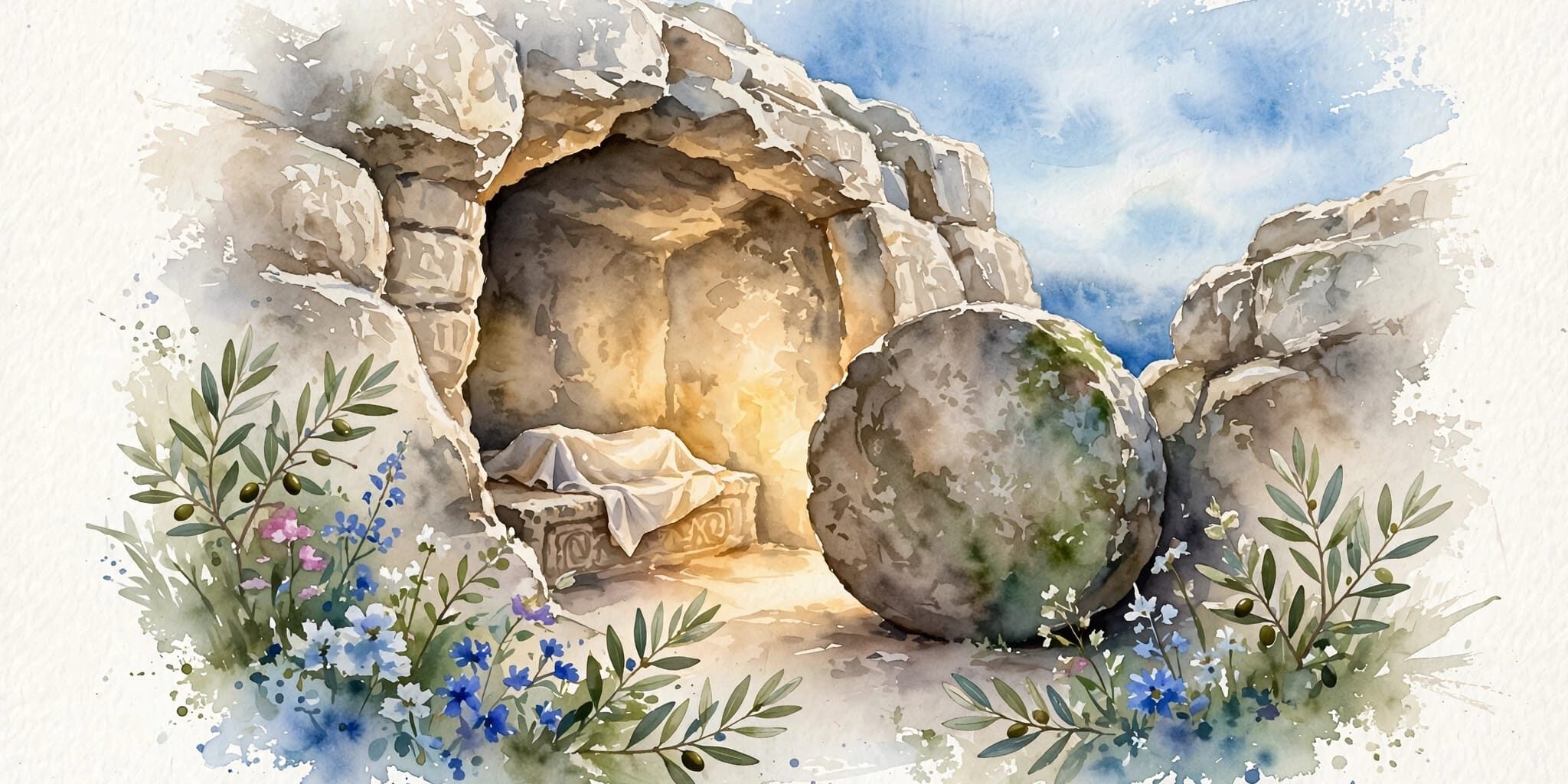
Jesus’ death wasn’t the end of the Gospel story. The Bible says God raised Him on the third day, and His followers encountered Him alive in the resurrection of Jesus.
I understand this as a bodily resurrection, with hope that matters in your life today. The clearest starting point is the New Testament’s testimony about the empty tomb and the risen Christ.
Key Takeaways
- The Gospels describe an empty tomb and encounters with Jesus alive.
- Paul connects the resurrection with forgiveness and believers’ future resurrection.
- Historical evidence deserves careful attention, while Christianity’s claims also involve faith.
How the Gospels Describe the Resurrection of Jesus
None of the four Gospels describes the moment Jesus rose. Instead, they recount what His followers discovered afterward.
The accounts share the central announcement but name different witnesses, locations, and encounters.
| Gospel | At the tomb | Encounters afterward |
|---|---|---|
| Mark 16:1-8 | Mary Magdalene, Salome, and Mary the mother of James find it empty. A young man in white announces Jesus has risen. | He promises a meeting in Galilee; the shorter ending narrates no appearance. |
| Matthew 28 | Mary Magdalene and the other Mary encounter an angel. | Jesus meets the women, then gives the Great Commission to the disciples on a Galilean mountain. |
| Luke 24 | Women from Galilee discover the empty tomb and two men in shining clothing. | Jesus appears on the Emmaus road and in Jerusalem before ascending. |
| John 20-21 | Mary Magdalene discovers the opened tomb; Peter and another disciple investigate. | Jesus meets Mary, the disciples, Thomas, and disciples beside the Sea of Tiberias. |
The differences deserve attention rather than forced agreement on every detail.
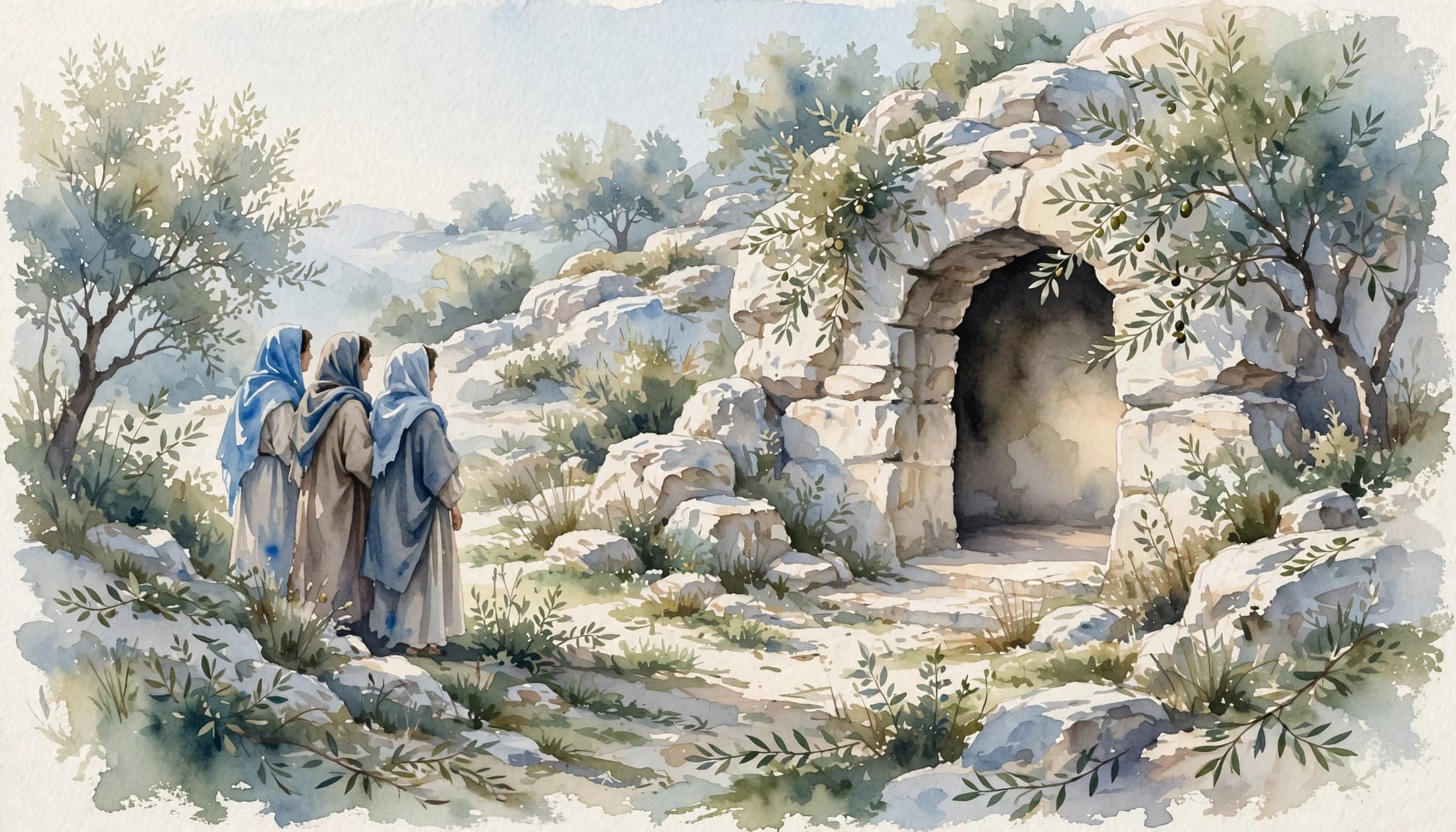
Mark’s earliest surviving manuscripts end at 16:8. Matthew’s Great Commission commands discipleship among all nations (28:16-20).
Matthew includes the Great Commission, while Luke’s ending moves toward the ascension.
Luke emphasizes Jesus’ physical reality: He has flesh and bones and eats broiled fish. The King James Version also mentions honeycomb, absent from many modern translations.
Although Luke compresses the closing events, Acts 1 specifies forty days of appearances before the ascension and records Jesus’ promise of the Holy Spirit. Acts 2 then describes the Holy Spirit coming at Pentecost.
Paul’s Testimony and Its Jewish Background
The earliest resurrection summary
In 1 Corinthians 15:3-8, Paul preserves an early creed he received, among the earliest surviving summaries of resurrection belief. Christ died for sins, was buried, and rose on the third day according to Scripture.
Paul lists appearances to Cephas (Peter), the twelve, more than five hundred brothers and sisters together, James, all the apostles, and finally himself.
This passage shows that resurrection proclamation preceded the written Gospels. It also connects Jesus’ death and resurrection as the heart of the gospel.
Resurrection beliefs weren’t uniform
Ancient Jewish groups disagreed about life after death. Josephus describes the Sadducees as holding that soul and body perish, while Essenes affirmed the soul’s immortality without bodily restoration.
The Pharisees affirmed continued life and bodily resurrection, unlike the Sadducees. Acts 23:8 confirms that Pharisees and Sadducees disagreed, as the Pharisees defended resurrection.
Against that background, Christians proclaimed that God’s promised resurrection had already begun with Jesus.
Why the Resurrection Matters for Christian Faith
Christ’s authority and forgiveness
Romans 1:4 says Jesus was declared Son of God in power through His resurrection. Romans 4:25 connects His being raised with our justification. Justification means God accepts believers as righteous before Him.
Paul makes the stakes plain in 1 Corinthians 15:17: without Christ’s resurrection, faith is futile and believers remain in their sins.
I keep the cross and resurrection together because Scripture presents both as essential to salvation. Forgiveness comes through Christ, received by grace through faith rather than earned through religious performance.
Living help and future resurrection
Hebrews 7:25 and Romans 8:34 describe the living Christ interceding for believers. His ministry continues, giving you reason to approach God during guilt, grief, or uncertainty as you await His second coming.
Paul calls Christ the firstfruits of those who have died (1 Corinthians 15:20-23). Like the beginning of a harvest, His resurrection promises more to follow. At the second coming, believers will share in a bodily resurrection.
Colossians 1:18 also calls Him the firstborn from the dead. Together, these passages ground Christian hope in Christ’s continuing life and victory over death.
What Historical Evidence Can Establish
I distinguish the testimony of ancient sources from conclusions about God’s action. Scholars disagree about Jesus’ burial and empty tomb; some study resurrection belief while declining to judge a supernatural event through historical methods.
Gary Habermas’s resurrection argument maintains that Paul’s early creed implies an empty tomb. Critics question that inference and the reliability or independence of later Gospel narratives.
Women as the first tomb witnesses matter because ancient societies often restricted women’s public credibility. Supporters regard this detail as evidence against invention; critics note that women also fit the burial setting.
Tacitus’s account of Christians describes Nero’s persecution after Rome’s fire in AD 64. It documents suffering, but doesn’t establish that no Christian ever recanted. Martyrdom can demonstrate sincerity without proving every belief true.
Easter and Other Religious Understandings
Easter is Christianity’s principal celebration of the resurrection of Jesus. Its biblical setting is Passover, the festival remembering Israel’s deliverance from Egypt. The Gospels place Jesus’ final days within Passover, including the meal before his death, and connect the timing of his death to the festival. Easter services often include readings from the New Testament account. Customs for Easter vary among Christian traditions.
Other religions understand Jesus differently. Islam generally teaches that He wasn’t crucified but was raised to God. Ahmadiyya Islam teaches that He survived crucifixion. These differ from the New Testament’s proclamation that Jesus truly died and rose bodily.
Frequently Asked Questions
What do the Gospels say about Jesus’ resurrection?
The Gospels describe an empty tomb and encounters with Jesus alive, but none recounts the moment He rose. They differ in the witnesses, locations, and appearances they describe.
What does Paul say about the resurrection?
In 1 Corinthians 15:3-8, Paul says Christ died for sins, was buried, and rose on the third day. He also lists people and groups who encountered Jesus afterward, including Peter, the twelve, James, and himself.
Why does the resurrection matter for Christian faith?
The article connects Jesus’ resurrection with forgiveness, justification, and His continuing intercession for believers. It also grounds the Christian hope that believers will share in a bodily resurrection.
Can historical evidence prove that Jesus rose?
Historical sources and arguments can be examined, but scholars disagree about the burial, the empty tomb, and what the evidence establishes. The article distinguishes those historical questions from the Christian claim that God raised Jesus.
Hope Grounded in the Risen Christ
The Bible presents the resurrected Christ as alive, reigning, and able to save those who come to God through Him. His resurrection grounds forgiveness now, bodily resurrection ahead, and hope for His second coming.
For a connected reading, begin with Mark, then read Luke and Acts 1:3-11 and Acts 2:22-24 in the Amplified Bible. Notice Jesus’ appearances, the ascension, and the Holy Spirit’s witness. Keep the announcement and its meaning together.
Ask what hope the risen Jesus gives you today, then pray for courage to live in that hope.
If you’d like prayer or help understanding these passages, contact Praise Chapel or call (281) 338-6633.