


A closed book can feel intimidating when you are unsure where to begin your journey. With 66 books, different writing styles, and unfamiliar names, many new readers of Scripture stop before they begin.
The good news is that you do not need a perfect plan. You need a manageable starting point, a simple reading method, and enough patience to let your understanding of God’s Word grow over time.
Key Takeaways
- Start with a book that matches your current questions and interests.
- Read short passages within the broader biblical narrative instead of focusing on isolated verses.
- Use a simple pattern of observation, understanding, and application as a form of prayerful reading.
- Expect confusing sections, and keep a list of questions for further study.
- Prioritize reading the Bible daily over trying to finish your goal as quickly as possible.
Choose a Starting Point That Fits Your Season
There isn’t one required book for every new Bible reader. Your best starting place depends on what you want to understand first.
If you want to learn about Jesus, begin with the gospel of Mark in the New Testament. It moves quickly and focuses on Jesus’ actions, teachings, death, and resurrection. This book is a helpful choice when you want a clear introduction to the Gospels without starting with a longer narrative.
The Gospel of Luke offers a fuller account and gives special attention to people who were often overlooked. After Luke, continue into Acts, which details how the early church began and spread. Reading these books together gives you a connected story.
When you need words for fear, sadness, gratitude, or hope, read selected Psalms. These Old Testament passages, including Psalm 23, Psalm 27, Psalm 46, Psalm 51, and Psalm 121, are useful places to begin. Read each one slowly, and notice how honestly the writers speak to God through the Psalms.
Proverbs serves as excellent wisdom literature for those seeking practical guidance. You can read one chapter at a time, but remember that many of these sayings express general principles rather than promises that apply to every specific situation.
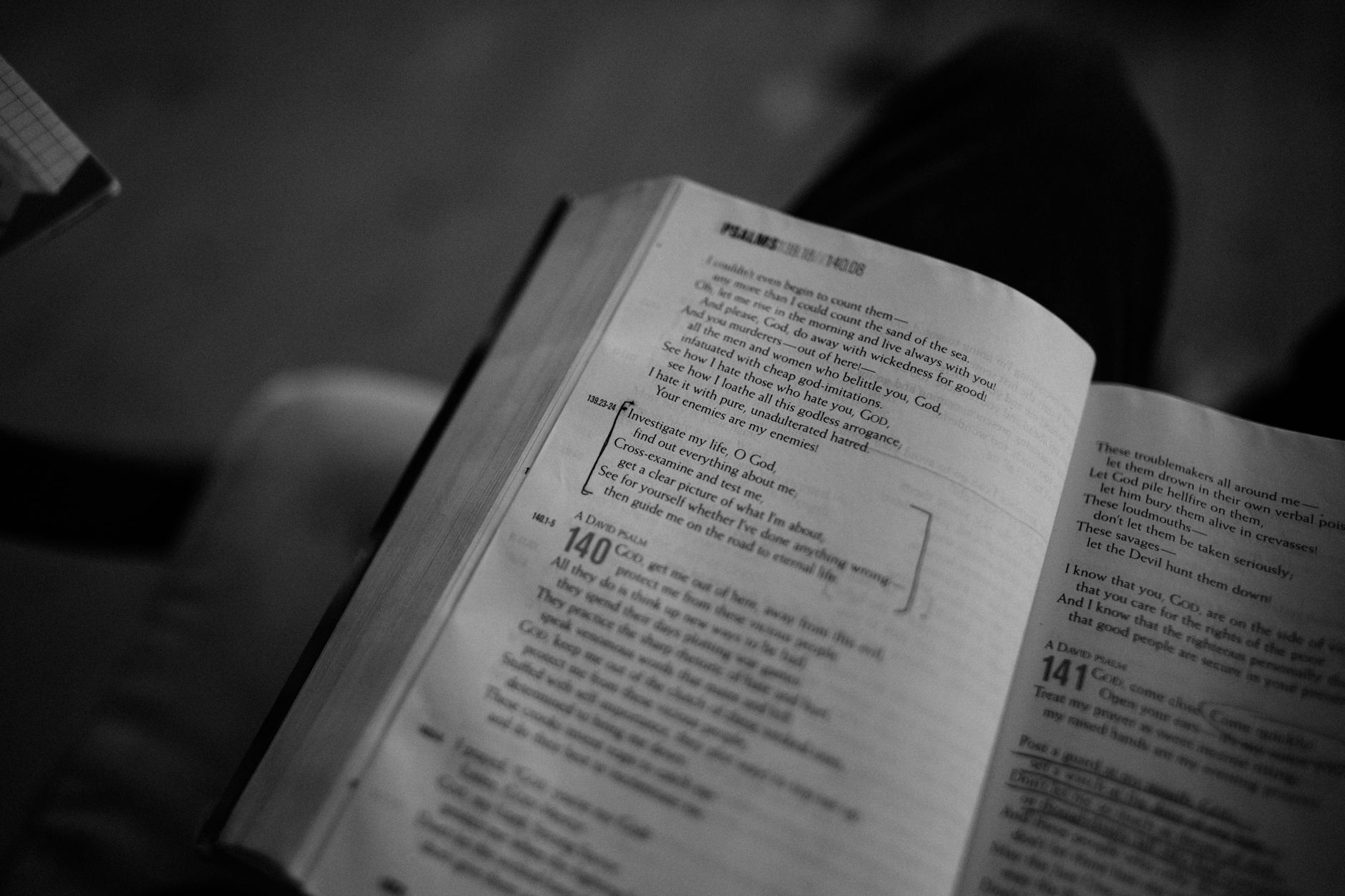
Photo by K
You can also start with Genesis if you want to follow the foundation of the biblical narrative, including creation, the life of Abraham, the story of Joseph, and the beginnings of Israel. However, you do not have to begin on page one and force yourself to read straight through the Old Testament. A thoughtful plan is more helpful than a plan that makes you quit.
Use a Simple Method for Reading the Bible
Many people ask how to read the Bible but receive advice that feels complicated. You can simplify your Bible study by starting with four questions: What does the passage say? What did it mean in its setting? What does it show about God and people? How should I respond?
First, read a short section without rushing. A paragraph, a psalm, or one story is enough for one sitting. Reading a section twice is an excellent way to practice Scripture meditation. The second reading often reveals repeated words or details you missed.
Next, observe the passage. Look for the people involved, the setting, the problem, the response, and the result. Notice commands, promises, questions, contrasts, and repeated ideas. You might also ask the Holy Spirit for guidance as you look for these details. Write down what you see before deciding what the text means.
Then consider the context. Read the verses before and after your selection. Ask who wrote the book, who first received it, and what situation the Scripture addresses. A verse can sound different when you read the whole paragraph around it.
Finally, respond in a practical way. You might write a prayer, confess something, encourage someone, or choose one action for the day. Bible reading becomes meaningful through personal application, which happens when your reading reaches your daily choices rather than just collecting information.
A notebook can help. Divide a page into three parts:
- Write one sentence describing the passage.
- Record one question or insight.
- Write a short prayer based on what you read.
Don’t pressure yourself to find a dramatic lesson every day. Some passages teach through a clear command. Others need time, study, and repeated reading.
Pay Attention to Genre and Context
The Bible is not a single, uniform book. It contains a diverse collection of literary styles, including history, poetry, wisdom, the writings of the prophets, letters, and narratives. Each of these distinct genres communicates in a unique way.
A Psalm uses imagery and emotion to express devotion. When the writer describes God as a rock or a shepherd, the language highlights protection and guidance rather than serving as a technical description. In contrast, you will encounter the epistles, such as Romans or Philippians, which address specific theological questions faced by early Christian communities. Proverbs offers concise wisdom for daily living, while apocalyptic literature like Revelation uses vivid symbols that require careful, patient study.
Before applying a verse to your life, consider the genre and the surrounding verses. Understanding the historical context and the original audience is essential for the accurate interpretation of Scripture. This process protects you from building a belief on a sentence pulled away from its main point.
A study Bible can provide introductions, maps, notes, and explanations of difficult terms to help you grasp these elements. Choose one that clearly identifies its translation and explains its methodology. You can also compare translations through Bible Gateway’s Bible version resources. Comparing two careful translations may clarify a difficult sentence, but it should never replace reading the passage as a whole.
For a visual overview of each book, use The Bible Project and their helpful book overviews. These summaries are excellent for helping you see how a specific book fits into the larger biblical narrative. Use these resources to support your study, but be sure to prioritize reading the text itself.
Context does not remove every question you might have. However, it provides a much stronger foundation for understanding what the original author actually communicated.
Build a Bible Reading Habit You Can Keep
A reading plan only works when it fits your life. To stay consistent, find a daily reading plan that suits your schedule, even if you only have 10 minutes. Morning, lunch, or bedtime can all work; the best time is simply the one you can repeat. If you prefer a structured long-term goal, many people enjoy using a one year Bible to cover the scriptures systematically. Some readers even choose to read chronologically to better understand how the overarching biblical narrative unfolds from beginning to end.
Begin with a modest goal, such as reading one chapter or a short passage five days a week. If you miss several days, return to the plan without trying to punish yourself by reading extra chapters. Consistency grows through returning.
Keep your Bible and notebook in a convenient place. If you read on your phone, silence notifications first. A printed Bible may help if screens pull your attention away. You can also use YouVersion’s Bible reading plans to choose a structured path.
Read aloud when a passage feels difficult. Hearing the words can slow your pace and reveal the movement of a prayer, story, or argument. Some readers also benefit from listening to an audio Bible while following along in the text.
Shared reading can help you stay engaged. Talk about a passage with a trusted friend, small group, or mature Christian. Different readers may notice details you missed, while respectful discussion can expose assumptions that need another look.
Praise Chapel is a multi-cultural, non-denominational church in Webster, Texas, with worship gatherings and online services for people who want to grow in faith with others. If you have questions about joining a Bible-centered community, contact Praise Chapel for information.
Know What to Do When a Passage Confuses You
Confusion is a natural part of the process when you are learning to understand the Bible. Difficult names, unfamiliar customs, and references to ancient places can interrupt your reading. You do not need to solve every problem in a single sitting.
Start by reading the passage again in a few different translations. You might look up the meaning of a specific place or person, but avoid opening ten resources at once. Too much information can bury the main point.
Write down your questions and continue reading. Sometimes a later paragraph provides the answer to an earlier concern. A book’s repeated themes may also make a confusing section clearer as you begin to see how it fits into the broader biblical narrative.
When you study a difficult verse, ask whether it is describing an event or giving a command. Consider whether it applies to the original audience, expresses a broader principle, or depends on a particular historical situation. Furthermore, pray for the Holy Spirit to provide insight, as you look for how the weight of Scripture points to the life and work of Jesus Christ. These questions and reflections help you avoid jumping to quick conclusions.
Cross-references and study notes can point you toward related passages. Still, remember that notes are written by people and can reflect different interpretations. Compare explanations carefully, and keep the Bible text at the center of your study.
You can also bring your questions to a pastor or a trusted church leader. Good guidance will never shame you for asking. Instead, it will encourage careful reading, honest discussion, and patience.
Some questions may remain open for a while. Mark them, keep reading, and return to them later. True understanding often comes through steady exposure rather than through one perfect explanation.
Frequently Asked Questions
Do I need to start at the beginning of the Bible?
No, you do not need to start in Genesis. It is often more helpful to choose a book that matches your current interests or questions, such as the Gospel of Mark for an introduction to Jesus or the Psalms for emotional expression.
What should I do if I don’t understand what I am reading?
Confusion is a natural part of the process. Try re-reading the passage in a different translation, look at the surrounding context, and write down your questions to study further later instead of trying to solve every problem in one sitting.
How much time should I spend reading each day?
Consistency is more important than volume, so start with a manageable goal like 10 minutes a day. A short passage read with focus and prayer is much more effective than forcing yourself to read long sections that leave you feeling overwhelmed.
Is it necessary to use a study Bible or commentaries?
While study Bibles and commentaries can offer helpful context and explanations, they are tools rather than requirements. Always prioritize reading the actual biblical text first before turning to outside resources for clarification.
Conclusion
Learning how to read the Bible starts with choosing a manageable book, reading a short passage, and paying attention to its context. You do not need to understand everything immediately. Whether you decide to read chronologically to understand the historical narrative, commit to a one year Bible challenge, or simply follow a structured daily reading plan, the most important thing is consistency. A regular habit, honest questions, and prayer will give your study of God’s Word room to grow.
If you want support as you begin, call Praise Chapel at (281) 338-6633. The first step is simple: open the Bible, read a small section, and return tomorrow.